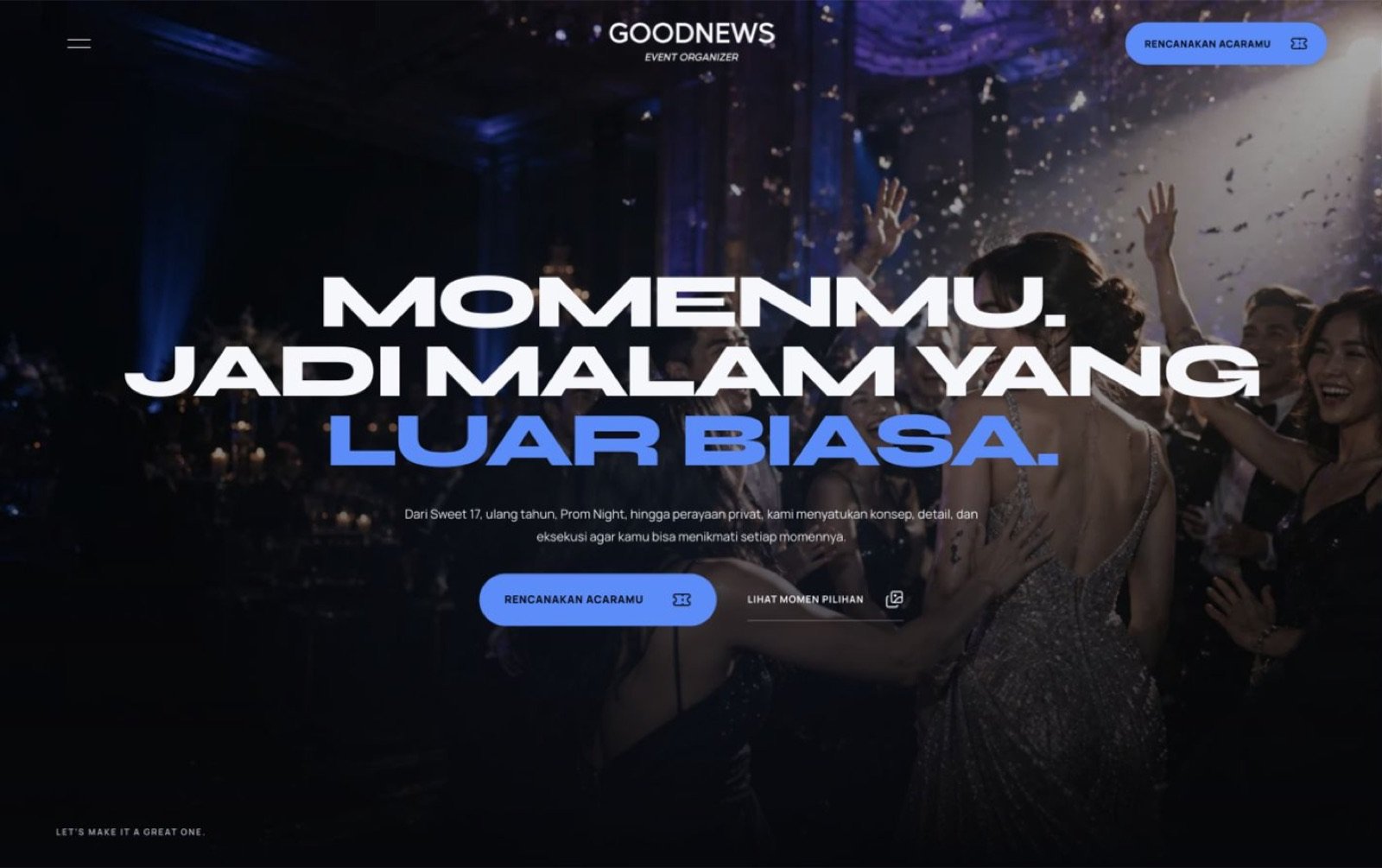
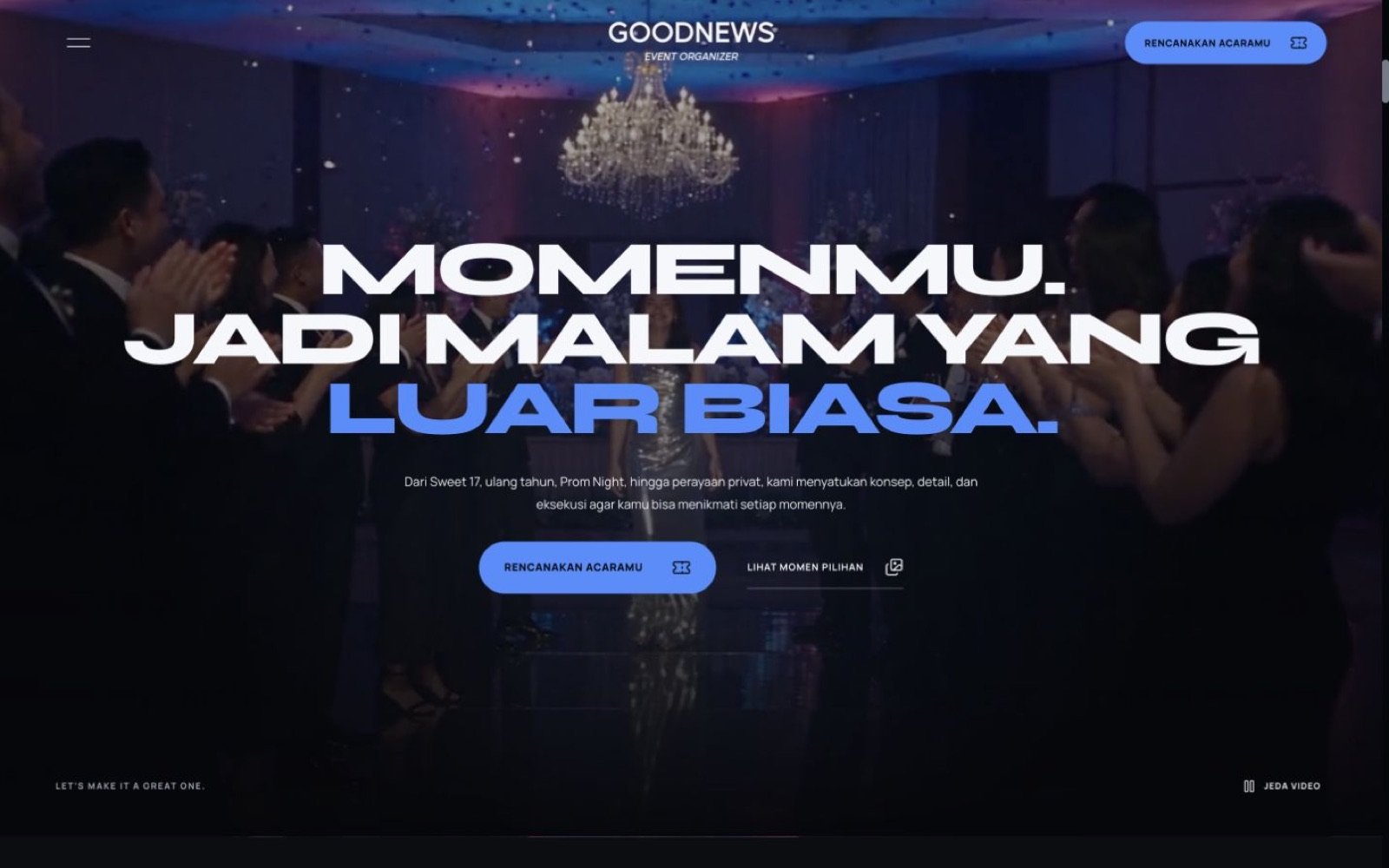
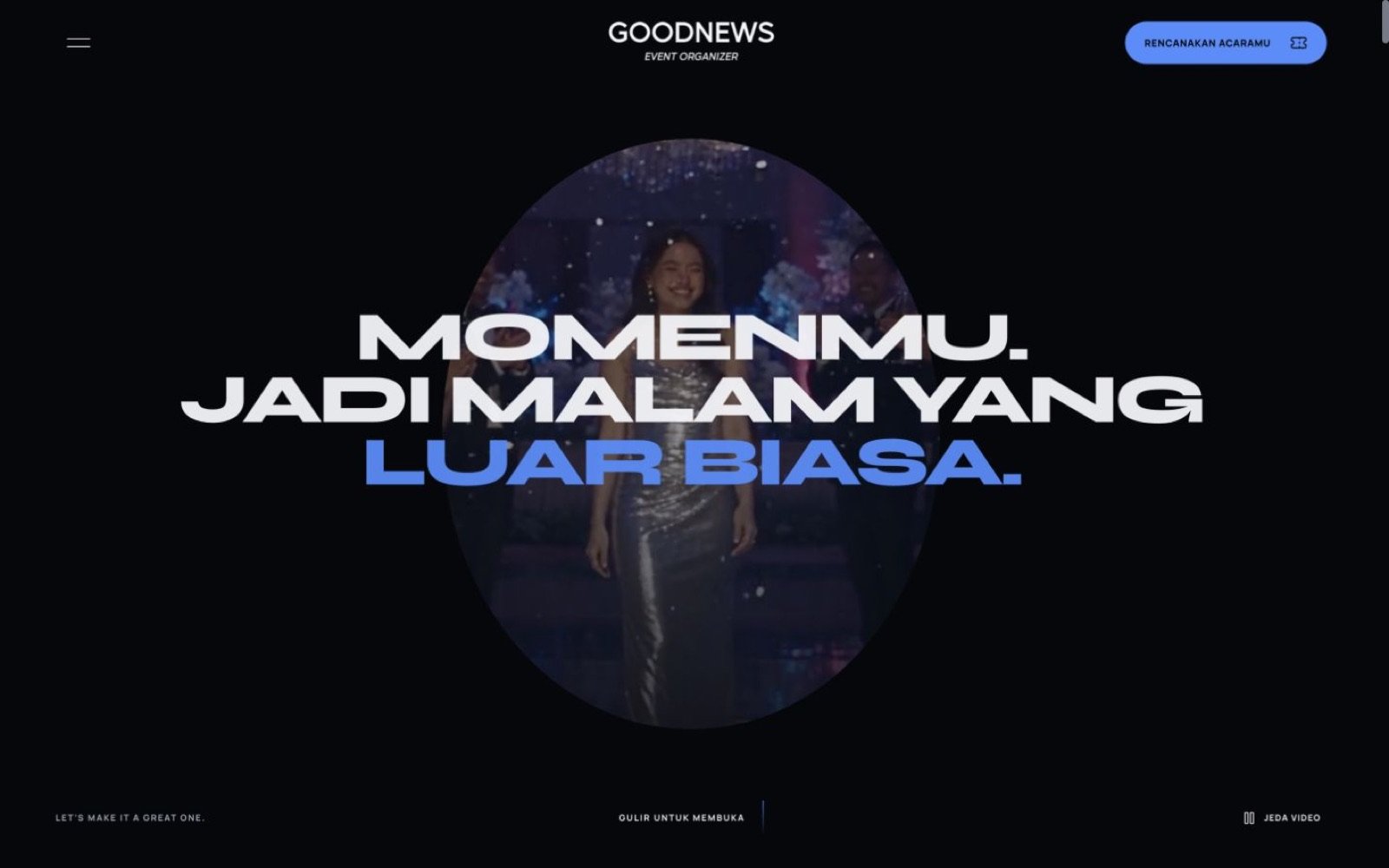
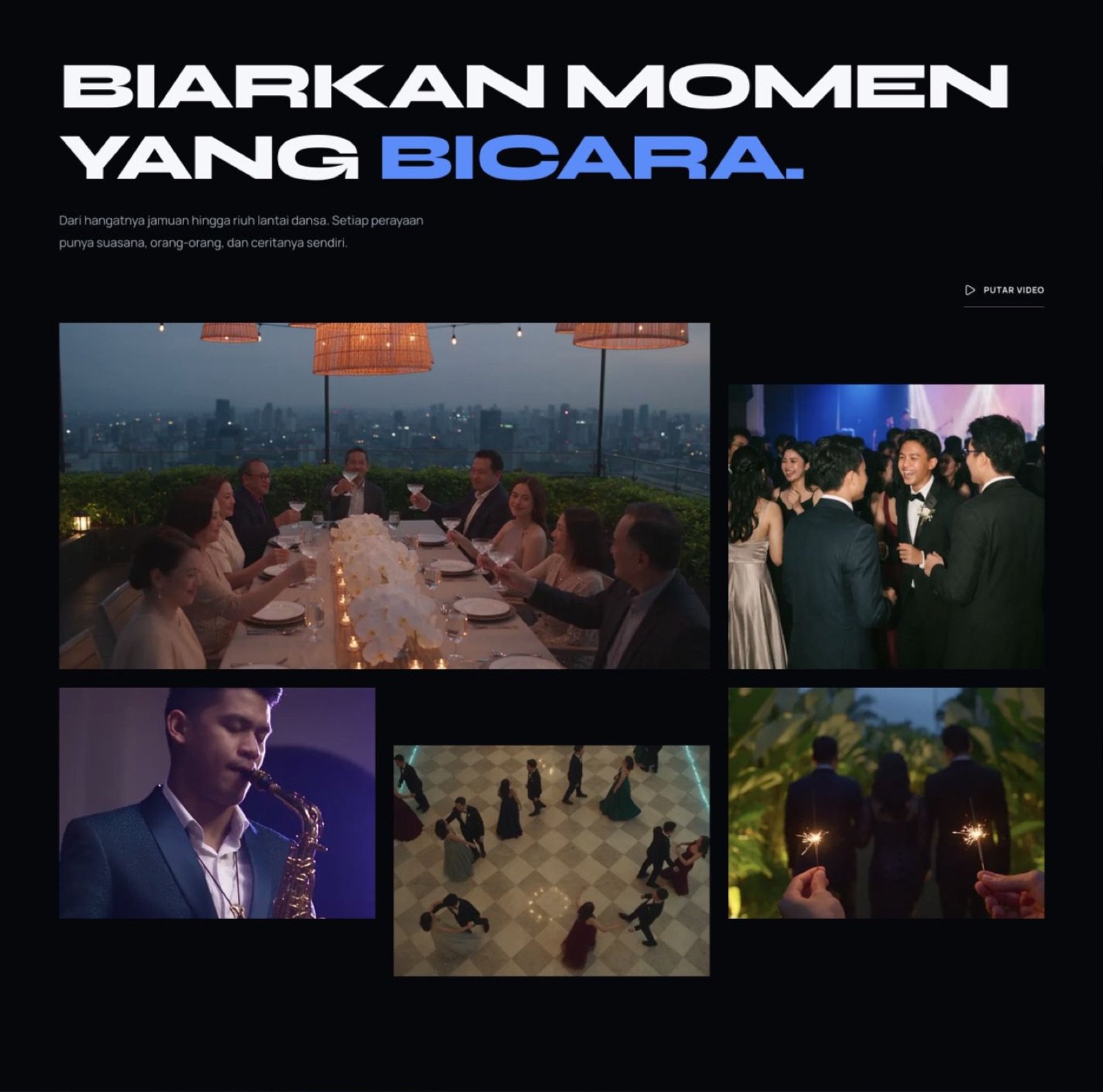
01A hero that opens the stage. The hero starts as an oval preview that already shows the video. On scroll, two panels open and the view widens into the event. Visitors feel like they are stepping into a celebration. The headline “Momenmu.” (your moment) puts the visitor at the center. Two CTAs offer a choice: plan now, or look at moments first.
resilient-monstera-9af4c7.netlify.app
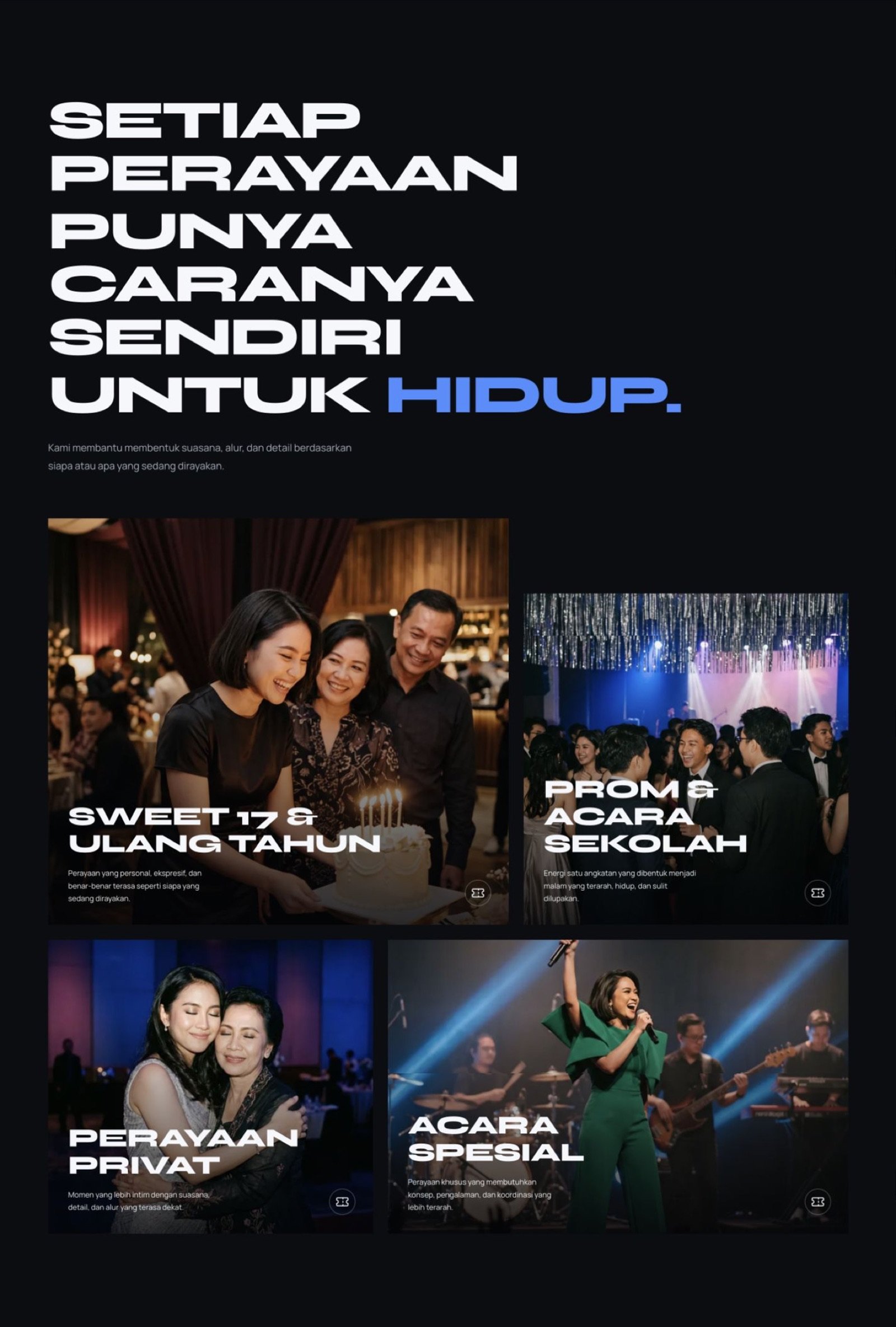
02Categories that carry the choice into the form. Four category cards answer a practical question: is this EO right for my event? Each card pairs a photo with a short description. On click, the page moves to the form with the event type already filled in. A choice just made does not need to be repeated. This is the most concrete link between design and the next step.
resilient-monstera-9af4c7.netlify.app
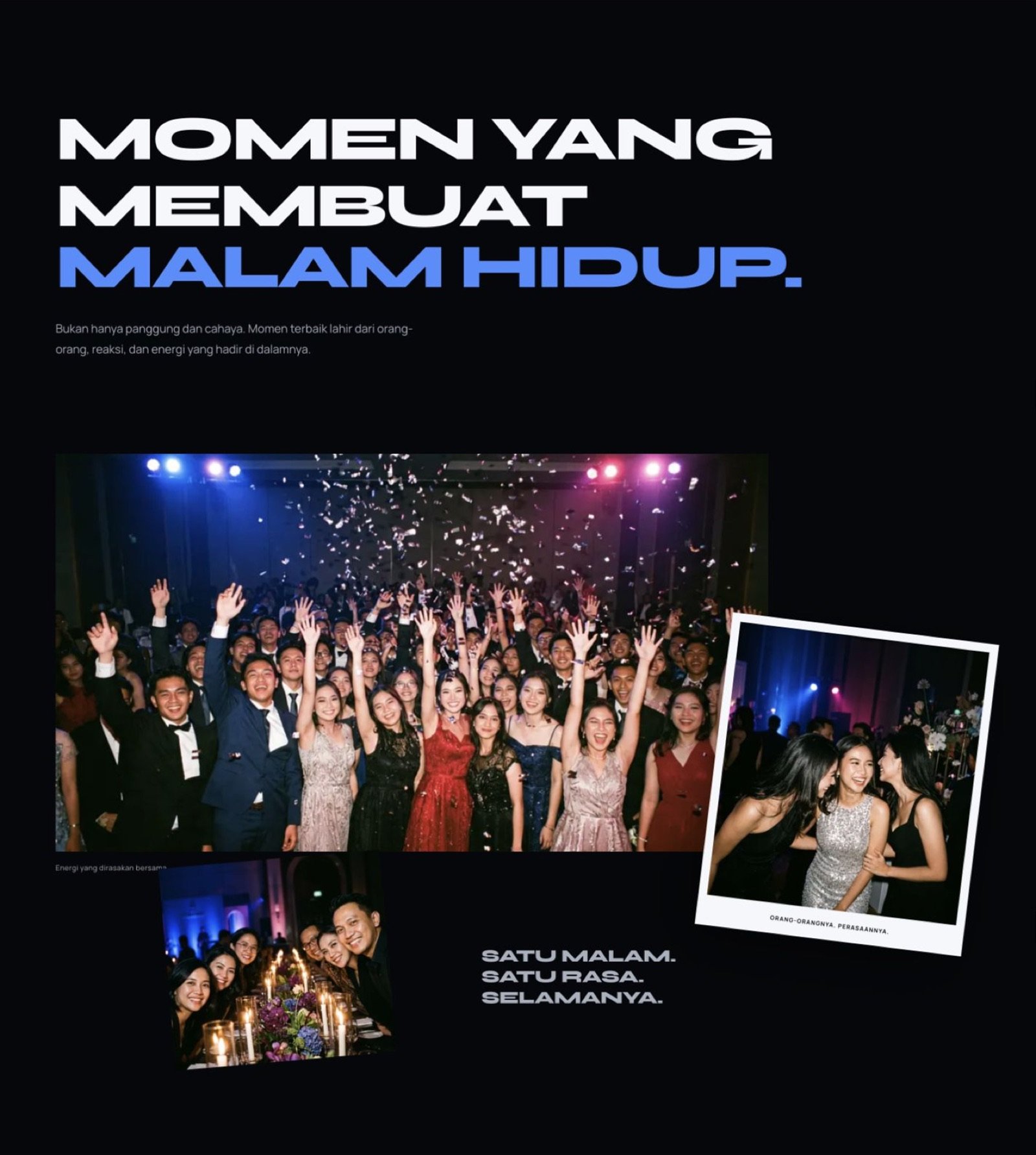
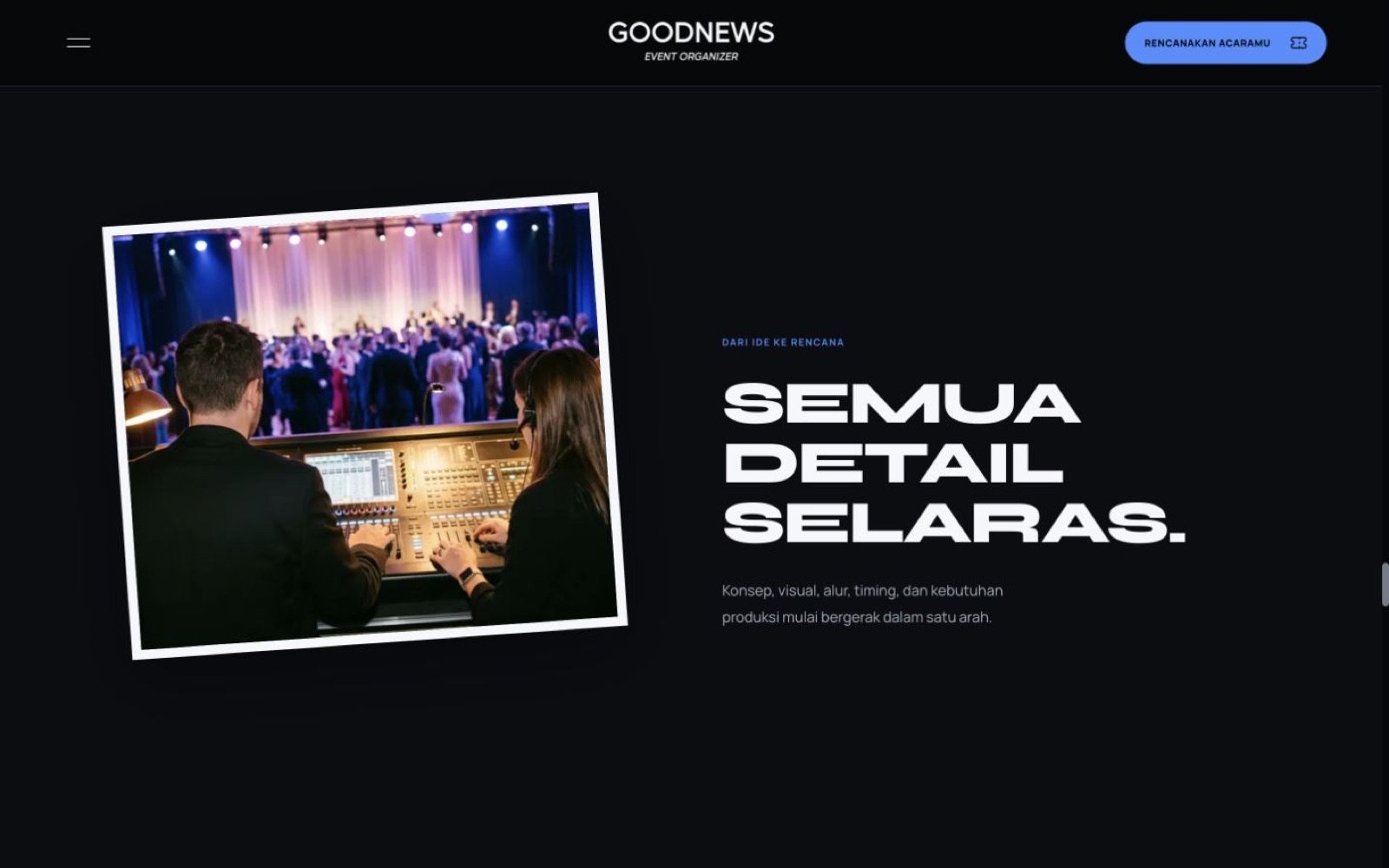
03Process as a story, not a list. After the mood comes an unspoken question: how does all this actually happen? Four chapters answer it, from the personal reason, to aligned details, to the night itself, to the memories that stay. On desktop, photos and text move in a sticky pattern. On mobile, chapters flow vertically. This is where the page shifts from desire to confidence.
resilient-monstera-9af4c7.netlify.app
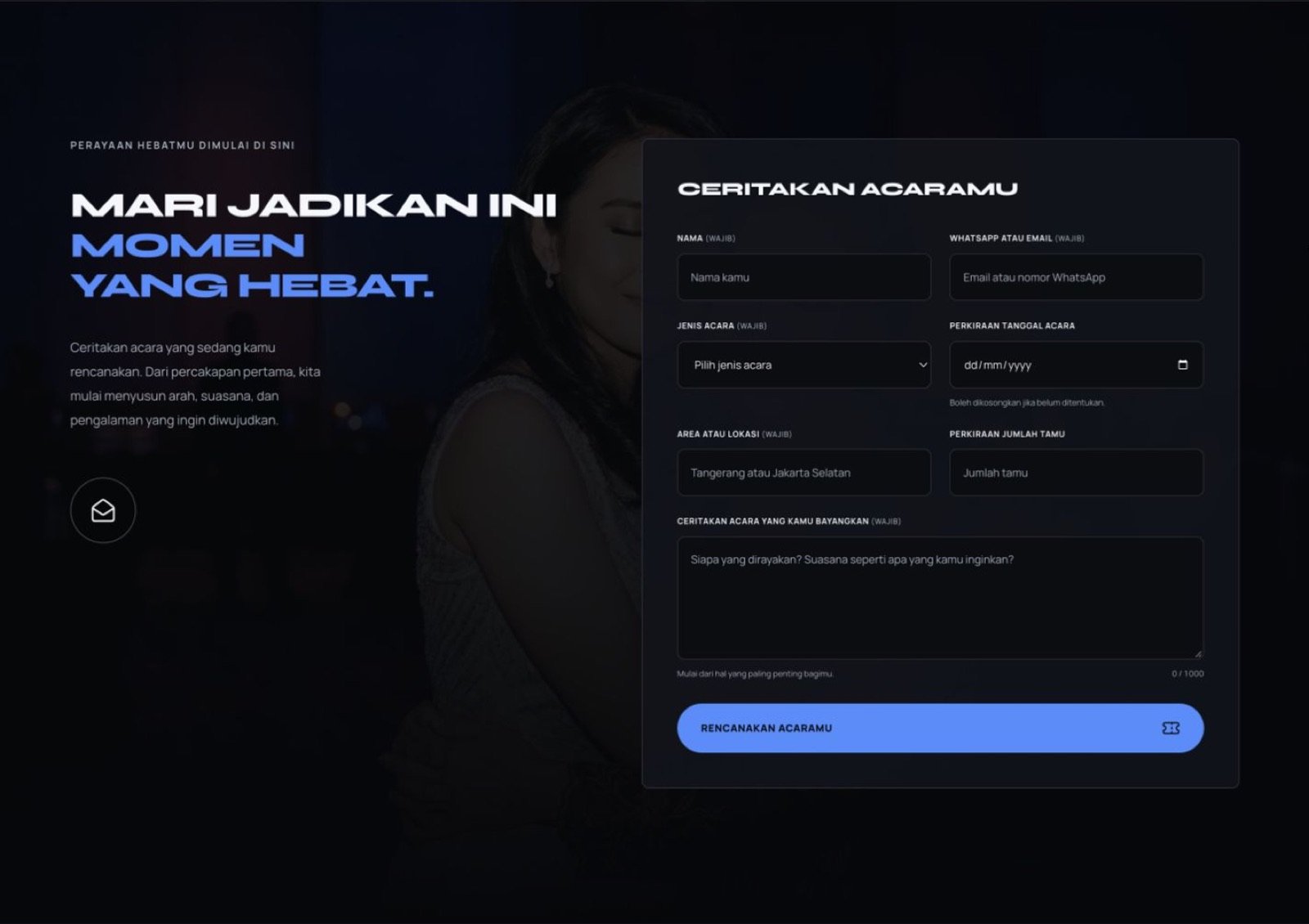
04A form that is easy to start. The form asks for a story, not a big decision. One field accepts WhatsApp or email. Date and guest count are optional, so an unsettled plan does not stop anyone. Required labels and validation messages sit next to each field. The heading carries the hero's promise into action: “Mari jadikan ini momen yang hebat” (let's make this a great moment).
resilient-monstera-9af4c7.netlify.app
resilient-monstera-9af4c7.netlify.app
Why this work works
Its strength is one idea that ties form and message together: step into a celebration, picture yourself there, then understand who looks after the details. The section order follows a shift in feeling, from curiosity to trust in the process. Blue is used only for key words and actions, so the eye knows where to go. Our hypothesis: pairing emotion with a sense of control makes visitors more ready to share their plans. That hypothesis has not been tested with visitor data.